How To Handle A Client’s Website When They Stop Paying
- •
- 12 min read
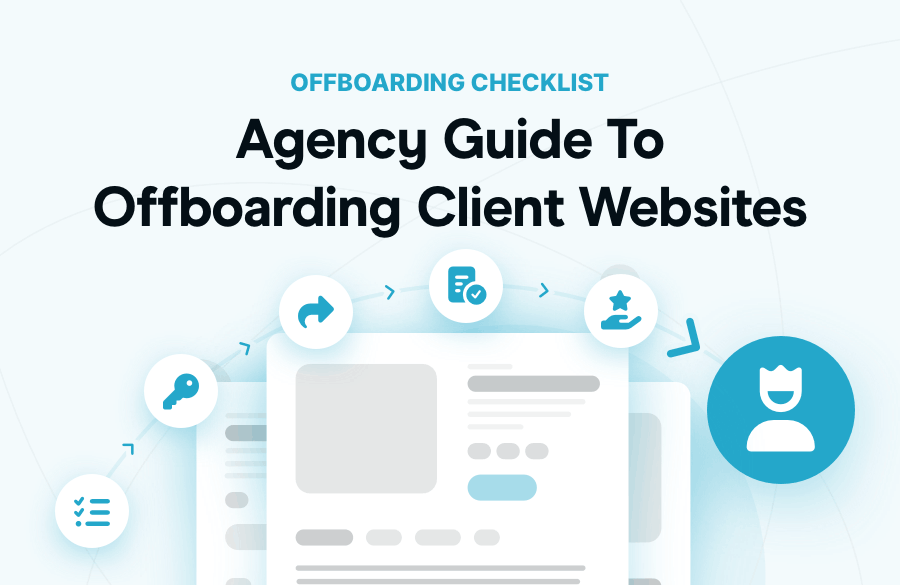
You’ve been there. The project wraps up. The client is happy. And you fire off an email with a zip file, a password sheet, and something like “let me know if you need anything.”
That’s not offboarding. That’s abandonment with good intentions.
How you hand a project off is how clients remember you. It’s almost like breaking up. They don’t look back on the cool homepage. They forget the rocket-fast load time. They remember the exit.
A clean offboarding isn’t a chore — it’s not even a service — it is a competitive advantage. Most of your competitors aren’t doing it. That’s your edge.
“Ending a client project is just as important as starting one. A proper client offboarding process ensures a smooth transition and complete project closure and sets you up for future opportunities.”
manyrequests.com
Whether you’re a solo freelancer or running a multi-client agency, offboarding comes down to one thing: ownership clarity.
Stop just closing projects. Close so well that your client refers clients to you, returns for the next project, and never needs to call you in a panic at midnight.
Close with style.
And here’s how to build that system.
Google “how to transfer a WordPress site to a client” and you’ll get plenty of results. Our favorite? “Depends on how much they are paying.“
Most advice walks you through the technical steps — export the database, migrate files, update DNS. That’s table stakes.
What those articles miss is the operational layer. The part that determines whether a client calls you for their next project, refers you to a colleague, or spends three months trying to figure out who owns their domain.
“Create an onboarding experience that makes clients think ‘Wow, these people really have their act together.”
Rocket.net – Top 8 Ways to Make Your WordPress Agency Stand Out
The same logic applies to offboarding. A lot of agencies have a terrible exit process. Your opportunity is to be the exception.
Before you move a single file, map the entire stack.
Open a spreadsheet and list every moving piece:
For each one, record the account owner, login email, and renewal date. Use Google sheets, that way you and your client can access and update the same document. Saves emails, too.
This spreadsheet becomes the most valuable thing you hand over. The client knows what they own. Their next developer knows what they’re inheriting. And you look like the pro who thought of everything — because you did.
“Clean data = smart decisions. Whether you’re tracking ad performance or improving SEO, your analytics need to reflect reality.”
Rocket.net – Why You Can’t Rely Just on Google for Website Traffic Anymore
The next developer who touches that site will know exactly who built it — and that it was done right. Legend.
Create a Google Workspace account using the client’s domain before you do anything else. Do this for every project.
Use that email address to register the domain, spin up hosting, configure SMTP, connect analytics, and register social profiles. Every account, tied to one address — one that belongs to the client, not you.
When the project ends, you’re not untangling a web of personal logins and 2FA codes tied to your phone. You hand over the Google Workspace credentials and they have everything.
No more “can you forward me the verification code?” at 11pm. No account hostage situations. Just a clean handover that takes minutes instead of days.
“Unlike affiliate models, reseller hosting keeps the client relationship — and the monthly income – in your hands.”
Rocket.net – Why WordPress Reseller Hosting Makes Sense
The same principle applies here: keep the relationship clean by keeping ownership clear.
One email address. Every key. Zero chaos.
Transferring hosting typically meant support tickets, manual file exports, backup dependencies, and long email chains. That friction creates hesitation. And hesitation creates retention for the wrong reason — clients don’t stay because they want to, they stay because leaving is painful.
That’s not a relationship. That’s a trap.
When clients know they can leave without chaos, they’re far more likely to stay. Not because they’re locked in, but because the relationship is built on trust instead of technical inconvenience.
If you’re hosting with us, the self-serve transfer feature in the control panel removes this friction entirely. Clients can initiate the transfer directly — no support ticket, no back-and-forth, no unnecessary delays. Better yet? You can do it for the client since you have access to their email.
The same control panel that makes managing sites easy for agencies makes transferring them clean for clients. That’s the point.
Empowering the exit is how you earn the next project.
Most agencies stop at handing over credentials. That’s a mistake. Put together a short tech stack overview – one page is enough:
This document does three things at once.
When someone drops your documentation into ChatGPT, Claude, or Perplexity and asks “how is this site configured?”, your decisions are the ones that come back. Structured documentation is how your agency gets cited in conversations you’ll never see.
In the age of AI search, structured clarity wins.
The handover email matters more than most people realize. Don’t send “Here are the logins.” Send something that feels like a delivery.
Subject: Your Website Is Officially Yours
A strong offboarding email covers five things:
The exit email is often the last impression you make. A cold password dump says the project is over. A structured, warm handover email says the relationship isn’t.
The agencies that get referrals are the ones that make every touchpoint feel intentional.
Most articles frame offboarding as risk management. Cover yourself. Avoid disputes. Don’t leave loose ends. That framing is too small. Think bigger.
Think about what a clean handoff actually signals: you’re confident enough in your work that you’re not afraid to let go. You don’t need to keep control of a client’s hosting to stay relevant. You don’t need lock-in because your value is obvious without it.
That kind of confidence travels. WordPress communities are tight. Agency owners talk. Freelancers compare notes.
When someone asks “who should I hire for my next build,” the answer almost always comes back to reputation – and reputation is built from moments exactly like a well-executed offboarding.
Give clients clean ownership. Remove the friction. Document everything. Make transfers simple.
You’re not just closing a project. You’re making a statement about how you work.
Use this before every handover:
Simple. Repeatable. Scalable.
Great people ship great sites.
Exceptional people design the exit with the same care they designed the homepage.
Those growing through referrals aren’t always the best builders. They’re the most trustworthy operators. In a market where trust is searchable, citable, and shared across communities – that’s the edge that compounds.
Offboarding is proof you never needed to trap the client to keep them.
Grow your business with lightning-fast, secure, and optimized websites that are easy to set up & manage. Top-tier agencies and online businesses choose Rocket.net as their trusted managed WordPress hosting provider – why shouldn’t you, too?